There is a moment on every successful project when the dirt gives way to water for the first time. Excavators quiet down, tradespeople lean on shovels, and a blue sheet slides across new tile like it has been there forever. That moment is why we build. At Signature Luxury Pools, we design and construct pools that match how people in the Upstate really live, not just how a catalog says they should. We serve homeowners and select commercial properties across Greenville, Spartanburg, Anderson, Lake Keowee, and, when a project calls for it, into Asheville and the western North Carolina foothills. The work ranges from compact plunge pools for city lots to hillside vanishing edges that seem to pour into the lake.
This region demands a pool builder who understands terrain, geology, and climate as much as design. Red clay swells and shrinks. Storms can drop three inches of rain in an afternoon, then give way to months of sunshine. Water table depth changes from street to street. We take those realities into account on day one, because they shape every decision that follows.
What sets a serious pool builder apart
A new pool is a construction project with all the moving parts of a small house, only you submerge the finished structure in water and ask it to perform for decades. Pretty renderings are the easy part. The hard part is integrating soil data, hydraulic balance, structural engineering, and the expectations of a family.
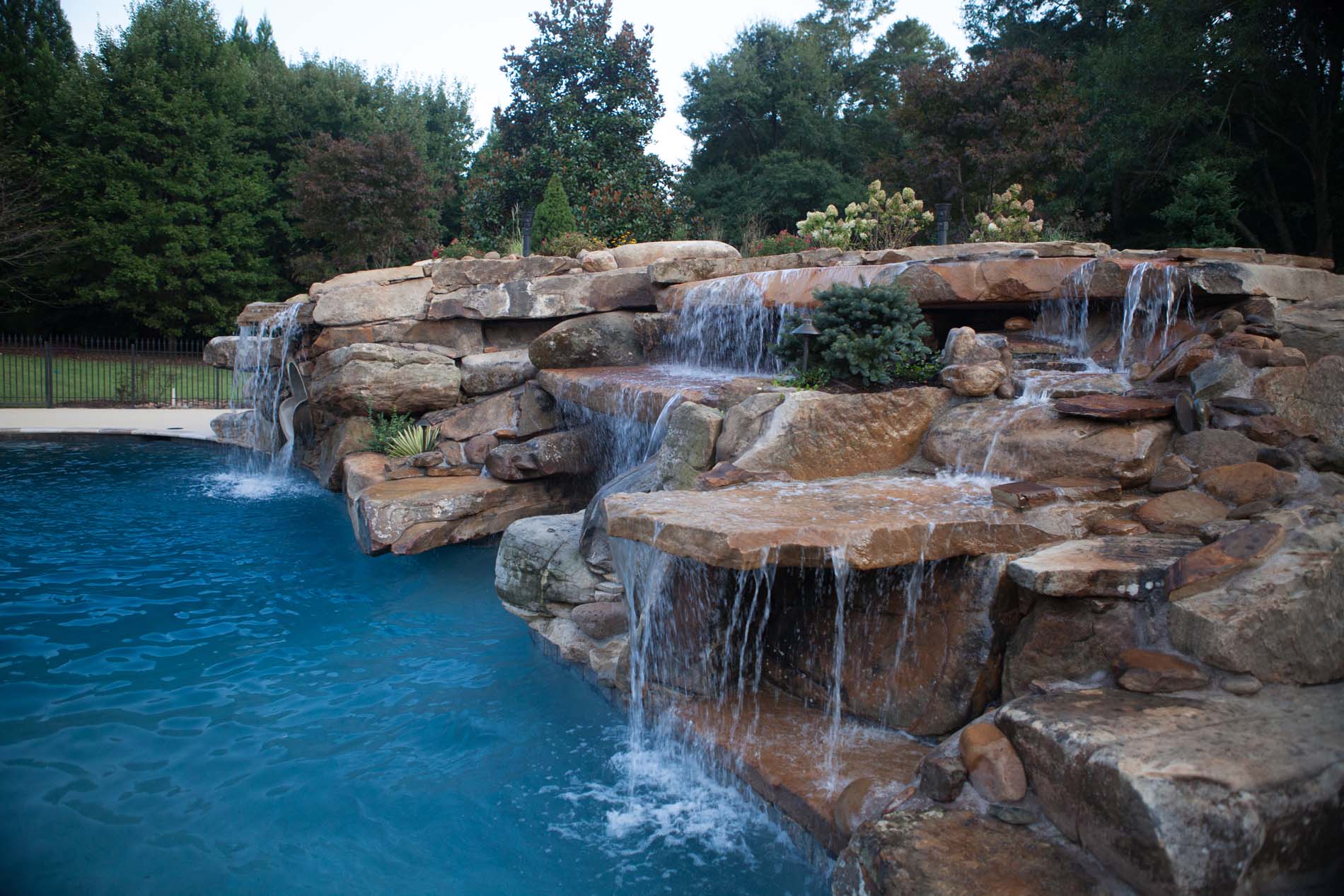
When you interview pool builders swimming pool contractor Signature Luxury Pools in Greenville, Spartanburg, or Anderson, look past surface polish. You want a swimming pool contractor who does three things consistently. First, they listen and translate what you say into measurable design criteria. If you tell me your kids cannonball and you hate cold water, that becomes a deep-end dimension and a heater capacity, not just a nod and a smile. Second, they push back where needed. A vanishing edge can be beautiful on Lake Keowee, but if prevailing winds blow toward the weir wall, you will run the autofill constantly and fight chemistry drift. Third, they show their math. Pipe sizes, turnover rates, rebar schedules, and shell thickness should be documented, not assumed.
We build that way because we have learned the cost of shortcuts. I have stood over a cracked deck that was poured without proper expansion joints, and I have cut out and replaced undersized suction lines that starved pumps. You only need to fix those mistakes once to become a believer in doing it right at the beginning.
The Upstate terrain, translated into design
No two lots behave the same, especially around Greenville and Spartanburg where elevations rise and fall within a block. In the city, we often squeeze a pool into tight setbacks and mature landscapes. Out near Five Forks or Simpsonville, you get depth and sun, so there is room for sport-pool layouts and integrated spas. Around Anderson, many yards roll gently, which makes a raised beam with a spillway a natural look that also solves for grade. On Lake Keowee, topography is everything. Homes sit above the waterline with steep slopes, and you may be working with architectural oversight from the community. In Asheville and the surrounding mountains, soil stabilization and drainage matter as much as aesthetics.
We start every project with a site visit that includes measuring slope, observing drainage patterns after rain if possible, and walking the sun path. For a pool builder in Greenville SC, that sun analysis determines where seating actually gets used in July. Afternoon shade from hardwoods can be a blessing, but place the spa under a canopy and you will fight leaves all winter. We model those trade-offs in plan view with simple overlays before anyone orders a single block.
If the lot requires a retaining wall, we tie it into the pool structure where possible to reduce differential movement. Soil borings become essential once the wall height crosses about four feet or the slope approaches a 3:1 ratio. In Spartanburg, the red clay’s plasticity index can climb high enough that we specify a thicker base and upgraded drainage blanket to keep the shell stable through seasonal cycles.
Concrete, fiberglass, or vinyl - and why we almost always recommend gunite
People often ask whether to choose gunite, fiberglass, or vinyl. Each has a place. Fiberglass offers speed and smooth finishes, and vinyl can be budget friendly. Most of our projects are gunite, also called shotcrete. It is the most flexible medium and the best suited to custom pool builders who shape spaces rather than drop a shell on a pad.
A gunite shell can curve to avoid roots or utilities, sit semi-raised to create built-in seating, and carry an integrated spa that shares water with the pool. It also stands up to soil movement when engineered properly. We design for a minimum 2,500 to 3,000 psi compressive strength and specify #4 and #5 rebar on a grid, closer where loads concentrate. On hillside pools near Lake Keowee, we increase the beam thickness and add pilasters where the cantilevered edge meets open air. That provides stiffness against downward thrust and eliminates the hairline fractures that show up when shells flex across voids.
Fiberglass has improved, and in some backyards it makes sense. If access is clean, the groundwater is low, and the client likes a shell shape that exists off-the-shelf, we will price and install it. Just understand the constraints. A fiberglass pool’s longest dimension is limited by transport logistics and site access. You also live with the step layouts and bench configurations that the manufacturer offers. For homeowners who want lap lanes with exact widths or water features placed to control sound direction, gunite is the better canvas.
The invisible hydraulics that make a pool a pleasure to own
Most complaints we get asked to fix on other builders’ projects trace back to hydraulics. Water that barely moves across the skimmer leaves debris. A spa that takes 45 minutes to heat gets used less. If you rely on too many 90-degree fittings to snake around obstacles, the pump must work harder to push the same volume, and you pay for that every month.
We size pipes for real-world friction losses, not just the distance from pump to return. A simple rectangle set 30 feet from the equipment pad might carry 100 feet of effective pipe length when you add up turns, valves, and rises. We upsize suction lines a step, often running dual skimmers and a dedicated vacuum port that ties back to the equipment through a long-radius manifold. Filter selection follows debris load. In heavily wooded parts of Greenville or Asheville, a large cartridge filter paired with a variable-speed pump runs quieter and more efficiently than a small sand filter driven hard. The pump’s sweet spot is where it moves the required gallons per minute at lower RPM’s. That means lower noise, lower energy use, and better performance on heating and sanitizing circuits.
Salt systems work well here when dialed in correctly, but they are not right for every pool. If the client wants a dark stone coping that is sensitive to salt, or there are water features that splash saltwater onto metal, we specify an alternative sanitation system. Ozone or UV can pair with low-dose chlorine to keep water clear without risking accelerated metal corrosion or stone etching. Good pool contractors will explain these choices and show you the maintenance implications.
Crafting spaces that live well year-round
A pool is rarely just a shell of water. The deck, shade, lighting, and adjacent features determine whether you use it daily or walk past it on the way to the garage. Our design process starts with how you plan to live outside for twelve months, not just June and July.
In Greenville’s spring and fall, a spa stretches the season. We tie spa jets and heater capacity to your actual habits. If you want a weeknight soak, a 400,000 BTU gas heater heats a well-insulated spa in the time it takes to change clothes, while a smaller unit works for weekend use when you do not mind a slower climb. On yards exposed to wind, we build windbreaks into the plan. Even a low wall planted with boxwood can keep the surface mirror-smooth and reduce heat loss.
Lighting is another make-or-break detail. We avoid glare on seating by aiming nicheless LED lights along swim paths and toward water features. On an infinity-edge or vanishing edge, we light the trough so the weir wall reads as a plane of glass at night rather than a black line. Steps and benches get their own highlights so guests know where to put feet. This is a small cost relative to the whole project and delivers outsized safety and ambiance.
We favor materials that complement Carolina architecture. Brick soldier courses make a crisp coping border on traditional homes in Spartanburg. On modern builds near Traveler’s Rest, poured-in-place concrete with sawcut joints looks right and stays cool with the right aggregate. For a pool builder in Anderson SC, where summer sun can bake a deck, travertine or porcelain pavers minimize surface heat. If you plan to host often, we sometimes raise the pool beam by 12 to 18 inches along one side and add a countertop finish. It acts as a bar edge where guests rest drinks and, as a bonus, creates a clean separation between pool splash and dining.
Building on slopes, over rock, and around roots
The hills around Lake Keowee and Asheville ask a builder to make smart choices early. Say you want a vanishing edge that appears to pour into the lake. The weir wall needs to sit high enough to create the visual but not so high that the trough becomes a magnet for leaves. We size the trough volume to catch splash-out during a crowd jump, then design drains that can evacuate that surge quickly during a storm. The pump dedicated to the edge operates on a timer paired with a wind sensor, so you do not atomize water on gusty afternoons.
If we hit shallow bedrock, we do not fight it blindly. Core drilling and epoxy-set dowels tie the shell to rock, or we shift the layout by a foot or two to avoid an ambitious blasting bill. Opposite constraint, a yard in the Augusta Road area of Greenville may be framed by old oaks. In that case, we tunnel under roots when needed and avoid heavy compaction within the critical root zone. That patience pays back in a living canopy and a deck that stays level as roots continue to breathe.
Permitting, HOA review, and inspections across municipalities
Working as a swimming pool contractor across multiple jurisdictions means understanding each office’s cadence. Greenville normally moves faster than Spartanburg on residential pool permits, but both focus on barrier compliance. Expect to document fence height, latch location, and door alarms where the house forms part of the barrier. Anderson can be particular about septic setbacks. We coordinate with the county environmental health team early if there is a tank or drain field nearby. On Lake Keowee, add shoreline and community design guidelines. Many neighborhoods require pre-approval on materials and layout, especially for features visible from the water.
In Asheville and Buncombe County, erosion control measures are non-negotiable on slopes. Silt fence and proper construction entrances cut mud tracking and keep neighbors happy. Plan review often asks for structural details on elevated decks or raised beams. We provide stamped drawings where required.
Those realities affect timeline more than budget. A good pool contractor will sequence design, permits, and lead times so you are not waiting for a filter when the shell is ready for plaster. We order long-lead items like heaters and automation boards during permitting so they are on site when the steel gets tied.
Timelines that respect both seasons and craft
Homeowners want a straight answer on how long a pool installation takes. The honest answer depends on complexity, weather, and material availability. In our climate, a straightforward gunite pool with standard features generally runs 10 to 14 weeks from excavation to water, not counting design and permitting. Add an attached spa, raised walls, water features, or complex hardscaping, and that stretches to 14 to 20 weeks. Rain can pause excavation or shotcrete for safety and quality reasons. We rarely shoot shells during a heavy cold snap because hydration and cure rates suffer. It is better to wait two days than to live with a compromised shell for decades.
We sequence trades to keep momentum without crowding the site. After shotcrete, we let the shell cure while plumbing pressure tests hold steady. Tile and coping install next, followed by equipment set and electrical. Decking ties the aesthetic together, then plaster or pebble goes in, and we fill immediately. Water chemistry starts the same day to protect the finish. We schedule a thorough owner orientation once the system stabilizes, not as a quick walk-through on the day we hand you a manual.
Real budgeting, with ranges that track reality
Every yard and design is different, but ranges help people plan. For the Upstate market, a custom gunite pool with a basic rectangle, quality equipment, simple tile and coping, and a modest deck often starts in the low 80’s. Add an attached spa and more substantial decking, and you move into the 110 to 150 range. Raised walls, a vanishing edge, or complex site work can push a project from 180 up to 300 or more, especially on steep lake lots where access drives cost real money to build and remove. Automation, upgraded interior finishes like exposed aggregate or glass, and integrated outdoor kitchens layer cost on top.
A note on allowances. If a builder carries thin allowances for tile or lights to show a lower base price, you will spend those dollars back during selections. We publish realistic allowances that match local vendors’ offerings, then we shop together. The goal is no surprises. On finance, many clients use home equity lines for favorable rates, but ask your bank to confirm whether your line covers improvements outside the house footprint. Some lenders want photos or inspections at draw points. We provide documentation to keep draws smooth.
Maintenance made simple: what you do weekly versus what we handle
A well-designed pool wants routine, not heroics. Plan for a quick weekly rhythm: empty skimmer baskets, check the pump basket, skim leaves, and test water with a reliable kit. Automation systems make most adjustments a screen tap away. We set up schedules for filtration, sanitation, and features to match your use patterns. During pollen bursts around Greenville in late winter, expect to clean filters more often. After summer storms, let the system run longer to recover clarity.
Seasonal care matters. After leaf drop, cartridge filters need a thorough hose-down. In January cold snaps, modern equipment can stay safe with freeze protection enabled, but it still helps to know where to turn off the gas and water in case of a power outage. We provide a laminated quick-reference card that sits in the equipment area. If you travel often or simply do not want to deal with chemistry, we offer maintenance plans. A good plan costs less than the frustration of waking up to cloudy water before a weekend gathering.
Case notes from the field
A small lot in North Main, Greenville: The clients wanted a place to cool off that would not dominate their postage-stamp yard. We designed a 10 by 20 plunge pool set eight inches proud of grade to avoid cutting roots from a pair of oaks. The raised beam created a built-in bench and a visual edge from the patio. We ran suction lines in parallel to protect flow while snaking around utilities. The water heats quickly, and the clients use it every evening from April to October.
A family pool in Spartanburg near Hillbrook: Three kids, frequent soccer teams visiting, and parents who wanted a spa for themselves. A 34 by 16 sport pool with a 5-foot flat center works for games, and wide steps off the shallow end keep chaos orderly. The spa shares a wall so conversation flows between zones. We chose porcelain pavers for a cool deck under bare feet. The heater is sized to lift the spa 2 degrees per minute, which keeps weeknight use realistic.
A vanishing edge above Lake Keowee: The lot dropped 12 feet across the backyard. We turned that into theater. The pool sits in a shelf carved into the slope, with a 28-foot weir wall aligned to sunset. We tied the shell into pilasters and used a drilled pier where an outcropping forced a cantilever. The edge pump is wind-sensor controlled to save water. From the porch, the pool looks like it pours into the lake, exactly what the owners wanted, but the trough stays clean because we oriented the weir parallel to prevailing winds rather than perpendicular.
A hillside project in Asheville: The soil report warned of shallow rock and potential seep. We laid a perforated footing drain behind the raised beam and lined the wall with a drainage mat. The beam thickness grew to 14 inches, and we added extra steel along the flex zone. When spring rains came, the site stayed dry. Those decisions do not show up in photos, but they are why the tile lines are still straight.
Choosing among pool builders in the Upstate
When you sit down with a pool builder in Greenville SC or a pool builder in Spartanburg SC, bring two things: clarity about how you want to use the space, and a willingness to hear where the site pushes back. A custom pool builder should welcome your ideas and test them. Ask to see recent projects in person. Stand on the decks. Listen to the water features. Ask the homeowners how long the spa takes to heat and whether the skimmers keep up after a windy day. Compare equipment pads. An organized pad with clear labels and unions at every connection is the mark of a professional. If you are interviewing a pool builder in Anderson SC and they gloss over hydraulics, press for pipe sizes and turnover assumptions. If you are considering a pool builder on Lake Keowee SC, ask about edge pump calculations and trough volumes. For a pool builder in Asheville NC, discuss drainage and freeze strategy.
The right partner will not just promise a pretty backyard. They will talk about the mundane parts with the same energy as the glamorous ones. They will care about the slope of a deck toward a drain as much as the color of the waterline tile. That mindset turns a pool into a low-friction part of your life.
What collaboration looks like with Signature Luxury Pools
From the first walk of your site, we map a path that respects craft and budget.
- Discovery and design: We listen for how you want to live outside, capture those needs in dimensioned plans and 3D views, and refine until the layout fits both the site and your routines. Engineering and permits: We develop structural details, submit complete packages to the city or county, and coordinate HOA review where applicable, so approvals move without ping-pong. Build with transparency: You get a schedule, weekly updates, and photos of key milestones like steel, plumbing pressure tests, and shell shoot. When weather shifts timing, we explain trade-offs and adjust openly. Startup and handoff: We commission the system, balance chemistry, and train you in person. You get documentation customized to your equipment, not a generic booklet. Support that lasts: Maintenance plans, seasonal check-ins, and responsive service calls when something needs attention. We built it, and we stand behind it.
Design choices that pay off later
A few details deliver returns for years. If a water feature is important, position it where you can hear it from inside the house with windows closed. Sound travels differently across water and hard surfaces. We test with a temporary hose before we commit. If small children will use the pool, build wide steps that turn a corner into the shallow end and add a bench in the deep end. It makes supervision easier and gives timid swimmers a bailout.
Tiles matter more than many think. A contrasting tile on step edges saves stubbed toes and looks sharp. Avoid highly porous stone on the waterline. In our climate, scale builds faster on soft, unsealed stone. Choose a porcelain or glass tile designed to live at that line.
For automation, buy capability you will actually use. If you are the tinkering type, a system with granular scheduling and remote valve control is fun. If you prefer simplicity, a clean interface with dependable presets is better. Either way, make sure the app you choose supports multiple users. Families appreciate being able to start the spa from different phones.
Why we build where we build
Working across Greenville, Spartanburg, Anderson, Lake Keowee, and Asheville has taught us that good design adapts. A pool that sits in a leafy Greenville neighborhood does not behave like one on a breezy point lot. The soils are different. Sun angles are different. People’s routines vary. Our role as pool builders is to carry that local knowledge into every project. We are proud to be the custom pool builders homeowners call when they want their yard to feel inevitable, as if the pool could not have been anywhere else, or any other shape.
The best compliment a client can give is not about tile lines or edge walls. It is when they tell us that their kids started eating dinner outside without being asked, or that the first swim each morning has become the quiet part of a busy day. Pools do that when they are built thoughtfully. If you are starting to imagine one of your own, we are here to listen, to advise, and to build the right way from the first shovel of dirt to the first ripple of water.